How to Track Irregular Habits: The App for Things You Do Not Do Daily
When did you last change the water filter? How long has it been since you called your parents? Is the car due for an oil change, or was that last month?
These are the questions that keep people up at 2am. Not because they are hard, but because there is no system designed to answer them.
Habit trackers were supposed to help. But open any popular one and you will find the same assumption baked into every screen: habits happen daily. There is a checkbox for each day. A streak that counts consecutive days. A calendar grid where every empty square is a failure.
That model works fine for "meditate every morning" or "drink 8 glasses of water." It completely falls apart for everything else.
The Problem With Daily-First Tracking
Think about the things you actually need to track in your life:
- Dentist appointment — every 6 months
- Oil change — every 5,000 miles or 6 months
- Call parents — every week or two
- Water indoor plants — every 10 days
- Replace toothbrush — every 3 months
- Clean oven — every 2-3 months
- Back up computer — every month
- Descale the kettle — every 4-6 weeks
- Rotate mattress — every 3-6 months
- Check tyre pressure — every month
How many of those are daily? None. And yet these are the tasks most likely to slip through the cracks, cost money when forgotten, or cause low-level anxiety because you simply cannot remember when you last did them.
Daily habit trackers force these irregular tasks into a framework that does not fit. You either ignore them (and forget), set calendar reminders that feel like spam after the third snooze, or try to shoehorn a 6-month cycle into a daily checkbox grid where 179 out of 180 squares are intentionally empty.
✨ The right question matters
Daily trackers ask: "Did you do it today?" For irregular tasks, the better question is: "How long has it been?" That single reframe changes everything about how you track.
Why "How Long Has It Been?" Is the Better Question
A days-since tracker flips the model. Instead of asking whether you did something today, it simply counts the days since you last did it. There is no checkbox. No streak. No calendar grid. Just a number — or better yet, a visual representation of elapsed time.
This approach is naturally suited to irregular tasks because:
It does not judge empty days. If you water your plants every 10 days, the 9 days in between are not failures. They are exactly correct. A days-since tracker understands this. A daily tracker shows 9 red squares.
It works at any interval. Whether the cycle is 3 days or 3 years, a days-since counter handles it identically. Change the threshold, and you are done. No need for complex "repeat every X days" configuration that most daily trackers bolt on as an afterthought.
It answers the actual question. When you are standing in the shop wondering whether you need a new water filter, you do not need to know your daily streak. You need to know: has it been 3 months or 6 months? A days-since tracker gives you that answer instantly.
It surfaces what needs attention. Items that have been longer since they were last done naturally rise to the top. You do not need to scan a calendar or count backwards. The things that need doing are visually obvious.
Setting Up Irregular Tracking That Works
The key to tracking irregular tasks is thresholds — a line that says "around this many days, you should do it again." Not a deadline. Not an alarm. Just a gentle boundary.
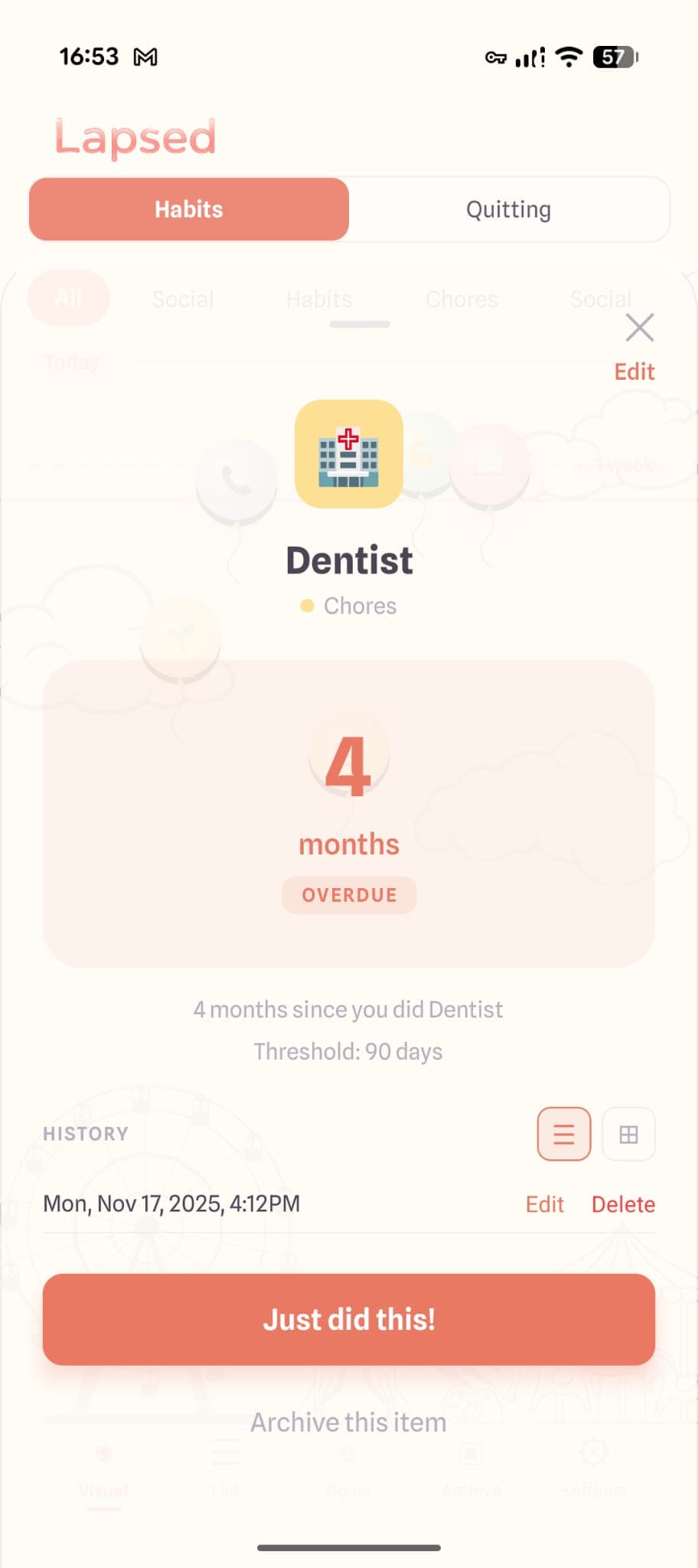
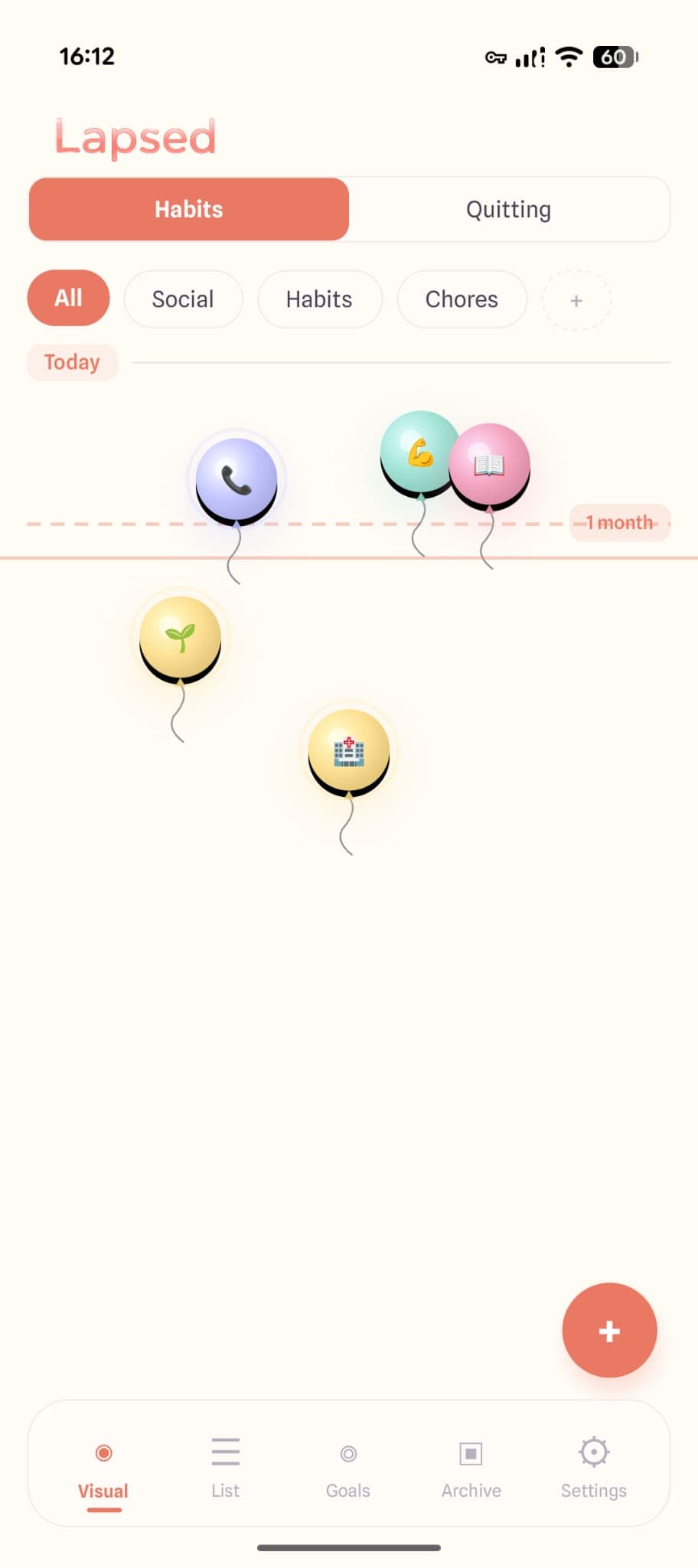
In Lapsed, thresholds appear as lines on the visual canvas. Items that have not crossed the threshold are fine — let them be. Items approaching the threshold are coming up soon. Items past the threshold need attention.
This three-state system (fine, coming up, overdue) is all you need for irregular tasks. It replaces the binary pass/fail of daily tracking with something that matches how life actually works.
Organising by Category
Irregular tasks span every area of life. Grouping them by category helps:
Home Maintenance
Air filters, gutter cleaning, appliance servicing, deep cleans. Tasks with 30-365 day cycles that are expensive to forget.
Health and Medical
Dentist, eye test, blood work, prescription renewals. Appointments that book out months in advance — knowing when you are due matters.
Vehicle Care
Oil changes, tyre rotations, brake inspections, MOT renewal. Mileage-based or time-based intervals that vary by vehicle.
Relationships
Calling family, catching up with friends, date nights. Not daily obligations — just things you want to do regularly without letting too much time slip by.
Real Examples of Irregular Tracking
Here is how a days-since tracker handles tasks that break every daily tracker:
The 10-day plant watering cycle. Set a threshold at 10 days. Water the plants whenever the item approaches the line. No need to remember which day of the week it was — the counter tells you when it has been long enough.
The 6-month dentist visit. Set a threshold at 180 days. When the item crosses the threshold, book the appointment. Since dentists often book 4-6 weeks out, you might set the threshold at 150 days to give yourself booking lead time.
The weekly call to parents. Set a threshold at 7 days. The beauty here is that if you call on day 5 one week and day 9 the next, neither is a "failure." The tracker simply resets and starts counting again. No broken streak. No guilt.
The irregular gym schedule. Maybe you aim for 3 times a week but life gets in the way. A days-since tracker with a 3-day threshold shows you when it has been too long, without punishing you for going on Tuesday, Friday, and Monday instead of a rigid Monday-Wednesday-Friday grid.
The Mental Load Problem
Irregular tasks create a specific kind of stress that psychologists call prospective memory burden — the cognitive load of remembering to do something in the future. Each untracked irregular task occupies a small slice of mental bandwidth, running in the background like an open browser tab.
Ten untracked irregular tasks means ten open tabs. Twenty means twenty. The result is that vague, persistent feeling that you are forgetting something — because you probably are.
A days-since tracker closes those tabs. Once a task is tracked with a threshold, you no longer need to hold it in memory. The tracker holds it for you. Your only job is to glance at the canvas occasionally and act on whatever has crossed the line.
Track the things daily trackers cannot
Lapsed is a visual days-since tracker built for irregular, periodic tasks. Set thresholds, see what needs attention, and stop carrying every task in your head.
Why Visual Tracking Suits Irregular Tasks Best
List-based trackers can count days since something happened. But visual trackers add a layer that lists cannot: spatial urgency.
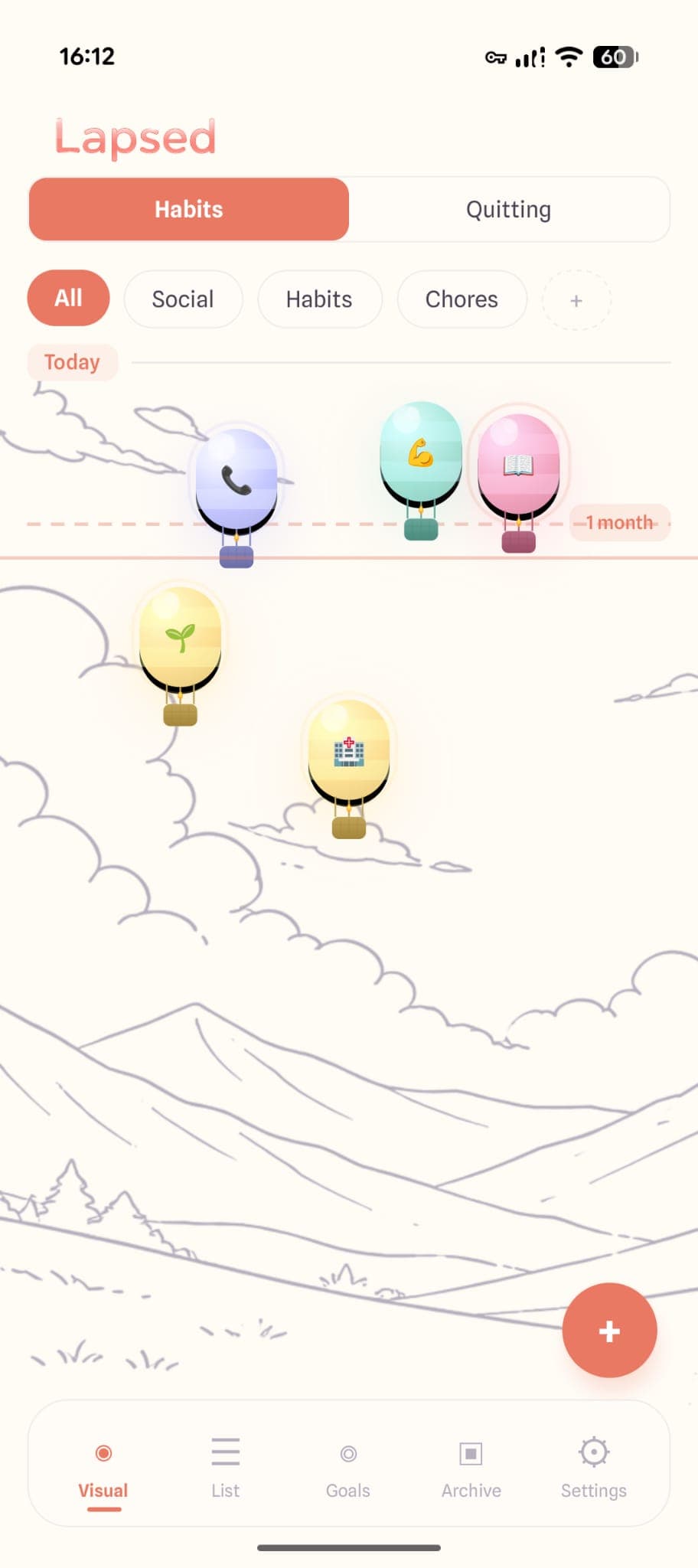
On a visual canvas, items that are overdue have physically drifted further from today's line. You do not need to read numbers or compare dates. You see the distance and your brain immediately understands: that one needs attention.
For irregular tasks with different thresholds — some at 7 days, some at 90, some at 365 — this spatial approach is especially powerful. The canvas normalises every task to its own threshold. An item 8 days past a 7-day threshold looks as urgent as an item 100 days past a 90-day threshold. The visual encoding handles the maths for you.
If you are interested in how this works, read more about the power of visual tracking or explore why days-since tracking is different from habit tracking.
For home-specific irregular tasks, the home maintenance tracker guide covers everything from air filters to annual servicing.
Stop forgetting the irregular stuff
Plants, dentist visits, oil changes, calling family — track every periodic task on a beautiful visual canvas. Free to start.
Written by Lapsed
The beautiful days since tracker. Track your life visually.
Related Articles
Days Since Tracker vs Habit Tracker: Which Do You Actually Need?
The difference between a days since tracker and a habit tracker is more than semantics. One asks 'did you do it today?' while the other asks 'how long has it been?' Here is why most people need the latter.
Track Health Events Without Obsessing: A Calmer Approach to Medical Tracking
Medication doses, doctor visits, symptom flare-ups, period cycles — track your health events with a visual day counter that creates awareness without anxiety.
The Home Maintenance Schedule You Will Actually Keep: A Visual Tracker Approach
Air filters, gutter cleaning, appliance servicing — home maintenance tasks are easy to forget and expensive to ignore. A visual day counter makes the whole schedule effortless.