Days Since Tracker for Couples: Be More Intentional About Your Relationship
Relationships do not usually end with a single dramatic event. They erode. Slowly, quietly, one skipped date night at a time.
You stop going for walks together because evenings got busy. You haven't had a proper conversation — not about logistics, but about how you are actually doing — in weeks. You meant to plan something fun last weekend, but the weekend came and went and you watched separate screens instead.
None of this happens on purpose. It happens because life is full of things that feel urgent, and your relationship rarely makes that list. Not because it does not matter, but because it is always there — and things that are always there are easy to neglect.
A days-since tracker changes this. Not by nagging you into being a better partner, but by making the invisible visible.
The Drift Problem
Relationships have a natural rhythm. When things are good, you do not think about how often you are connecting — it just happens. But when stress, work, children, or simple routine creep in, the rhythm breaks down without anyone noticing.
The problem is not that you stop caring. The problem is that you lose awareness. Three weeks pass since your last date night and it feels like one. A month goes by without a proper check-in and neither of you registers it.
💡 Research backs this up
John Gottman's research at the University of Washington found that successful couples make consistent "bids for connection" — small moments of reaching out. It is not grand gestures that sustain relationships, but the frequency and consistency of small, intentional ones. A tracker helps you see whether those small moments are actually happening.
This is where a days-since tracker becomes genuinely useful. When you can see that it has been 18 days since your last date night, or 11 days since you did something thoughtful for your partner, the drift becomes visible — and visible problems are solvable ones.
What to Track (and What Not To)
The point is not to turn your relationship into a spreadsheet. Track the things that, when they happen regularly, make your relationship feel alive. Here are some ideas:
Date night
Time together that is planned, intentional, and not about errands or logistics. Does not need to be expensive.
Real conversation
A proper check-in about how you are both feeling. Not "what is for dinner" but "how are you doing, really?"
Thoughtful gesture
Something small that says "I was thinking about you." A favourite snack, a note, handling a chore they dislike.
Quality time without screens
A walk, a drive, cooking together. Anything where you are both present and not staring at phones.
Time with their people
Spending time with your partner's friends or family. Easy to let slip, important for feeling like a team.
Planning something future
Booking a trip, picking a restaurant, making plans you both look forward to. Anticipation is a relationship nutrient.
What not to track: anything that turns the tracker into a scoreboard. This is not about proving who does more. It is a personal tool for your own awareness. You are tracking your own intentionality, not your partner's behaviour.
Why a Personal Tracker Works Better Than a Couples App
There are apps designed specifically for couples — shared calendars, love languages quizzes, relationship games. Some of these are fine. But there is a reason a simple, personal days-since tracker often works better.
First, it does not require your partner to download anything. The moment you need both people to use an app, friction increases dramatically. One of you will forget to log things. The other will feel resentful about doing all the tracking. It becomes a new source of tension rather than a solution.
Second, a personal tracker keeps the focus where it belongs: on your own behaviour. You cannot control whether your partner plans a date night. You can control whether you do. Seeing "14 days since I did something thoughtful" is a prompt for action, not an accusation.
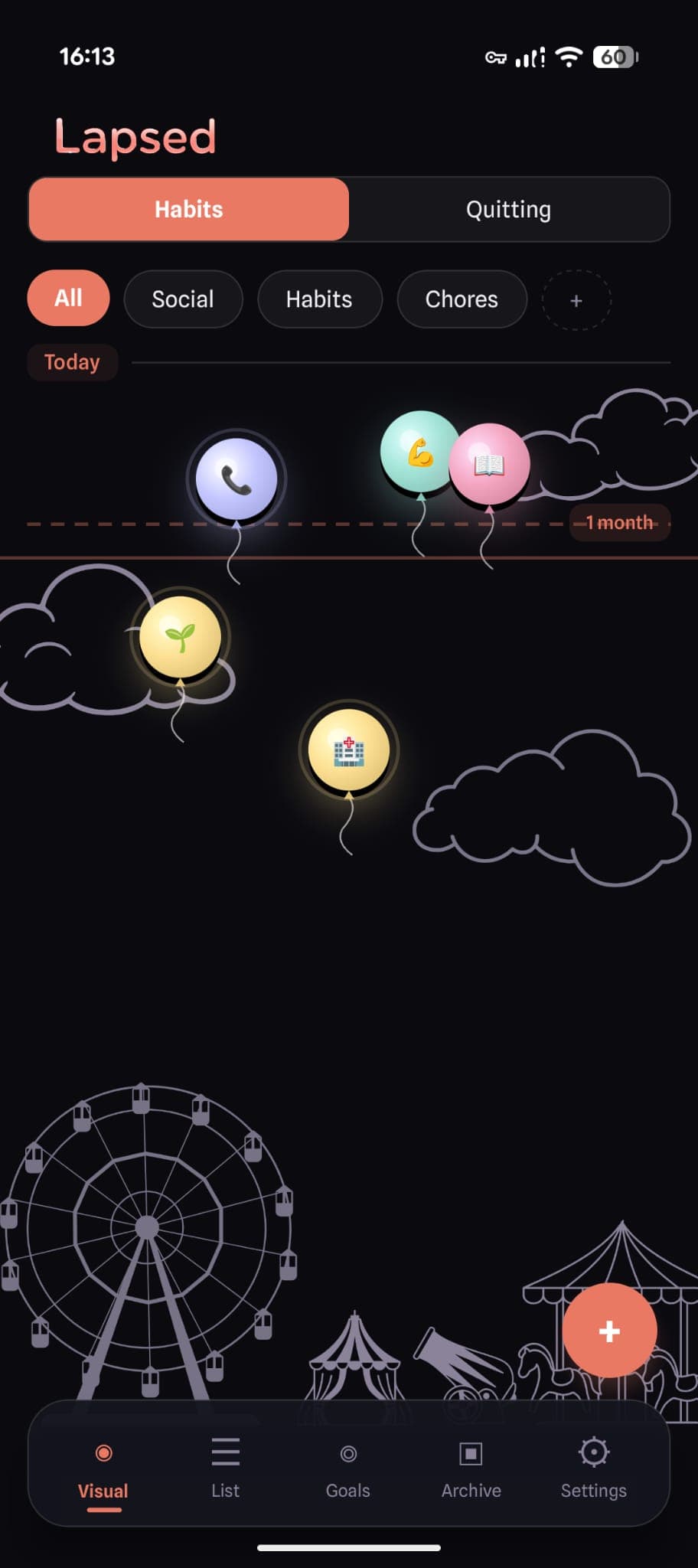
Third, it scales to your whole life. Your relationship is not the only thing that benefits from intentional tracking. The same app that tracks "days since date night" can also track "days since called mum" or "days since exercised." Everything in one place, with no extra cognitive load.
Setting Thresholds That Work
The power of a days-since tracker is in the thresholds — the point at which you want to be reminded that something is overdue. For relationship items, generous thresholds work best:
- Date night: 10 to 14 days. Weekly is ideal, fortnightly is realistic.
- Real conversation: 5 to 7 days. These should happen naturally, but life gets in the way.
- Thoughtful gesture: 7 to 10 days. Enough to stay present without it feeling forced.
- Screen-free quality time: 3 to 5 days. This one matters more than people think.
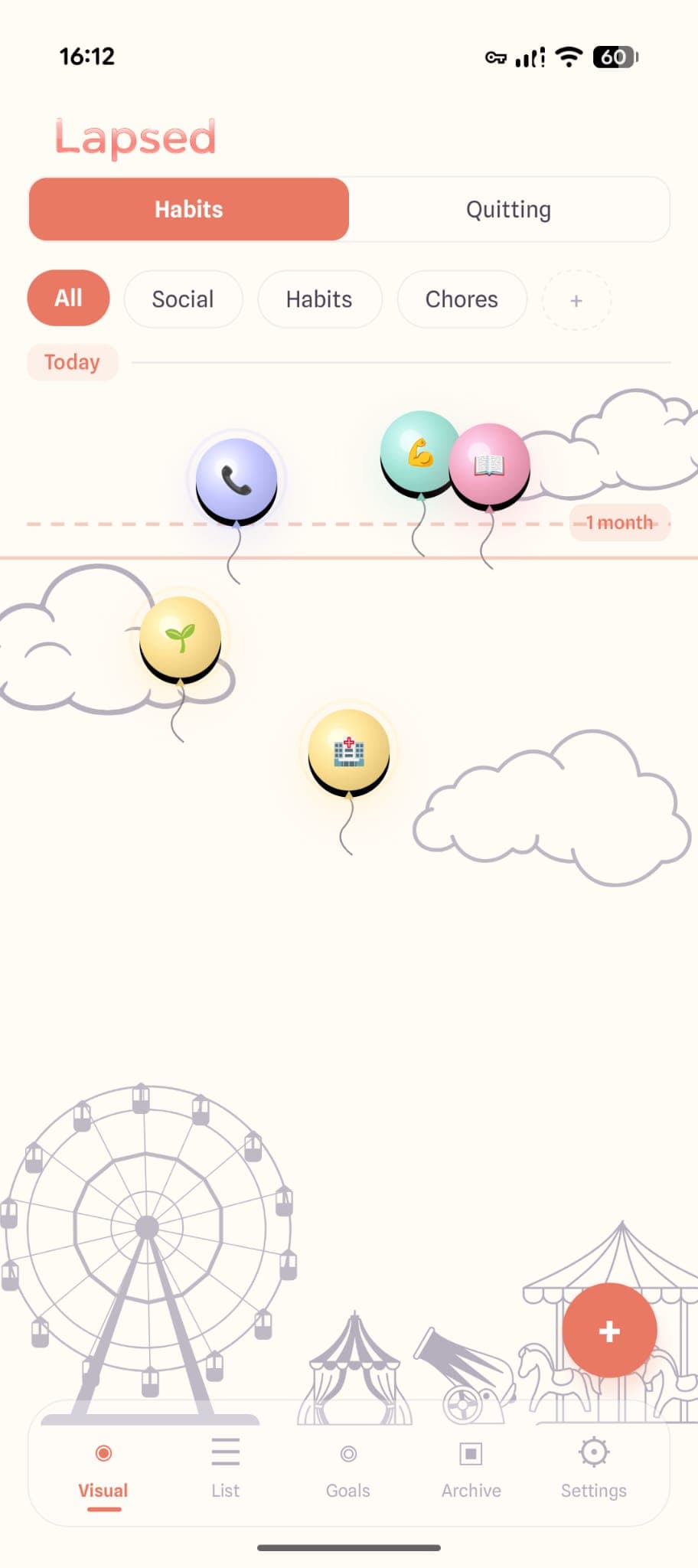
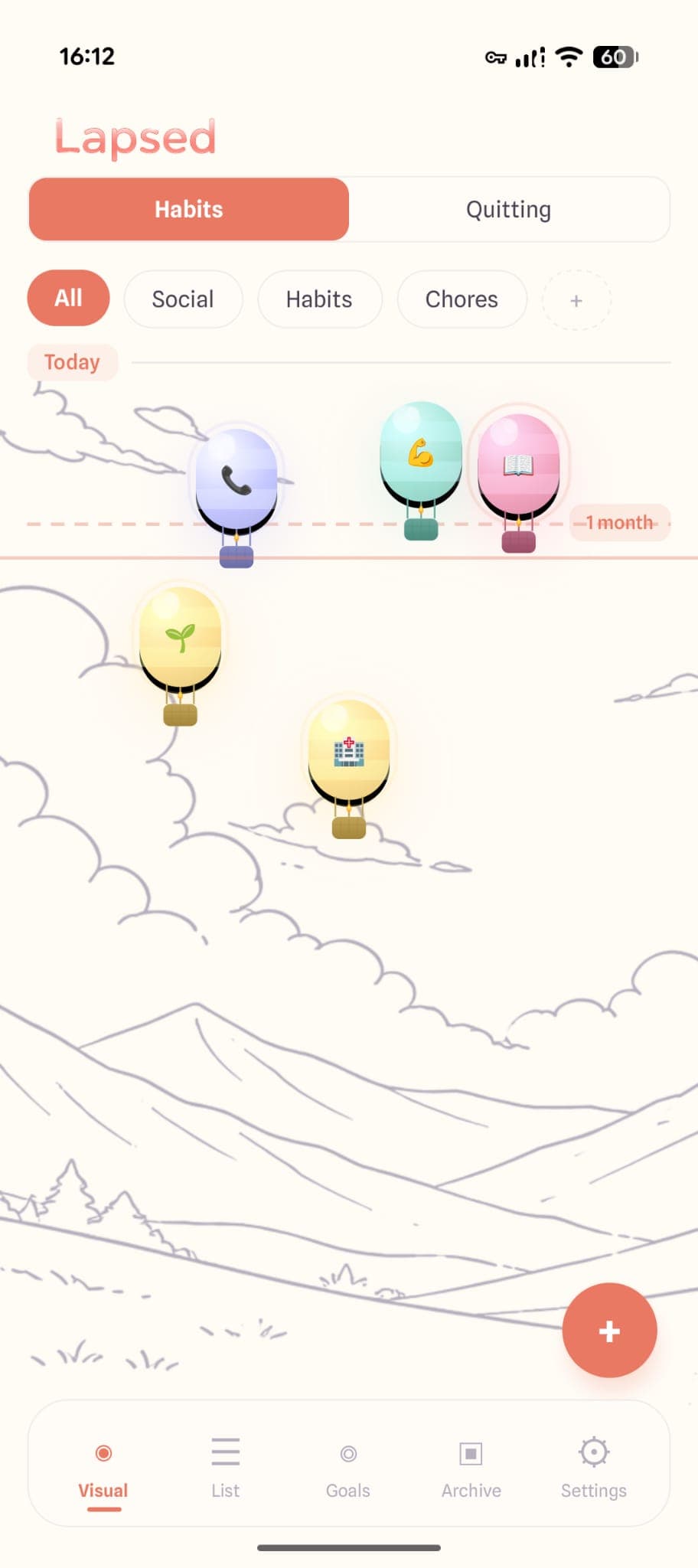
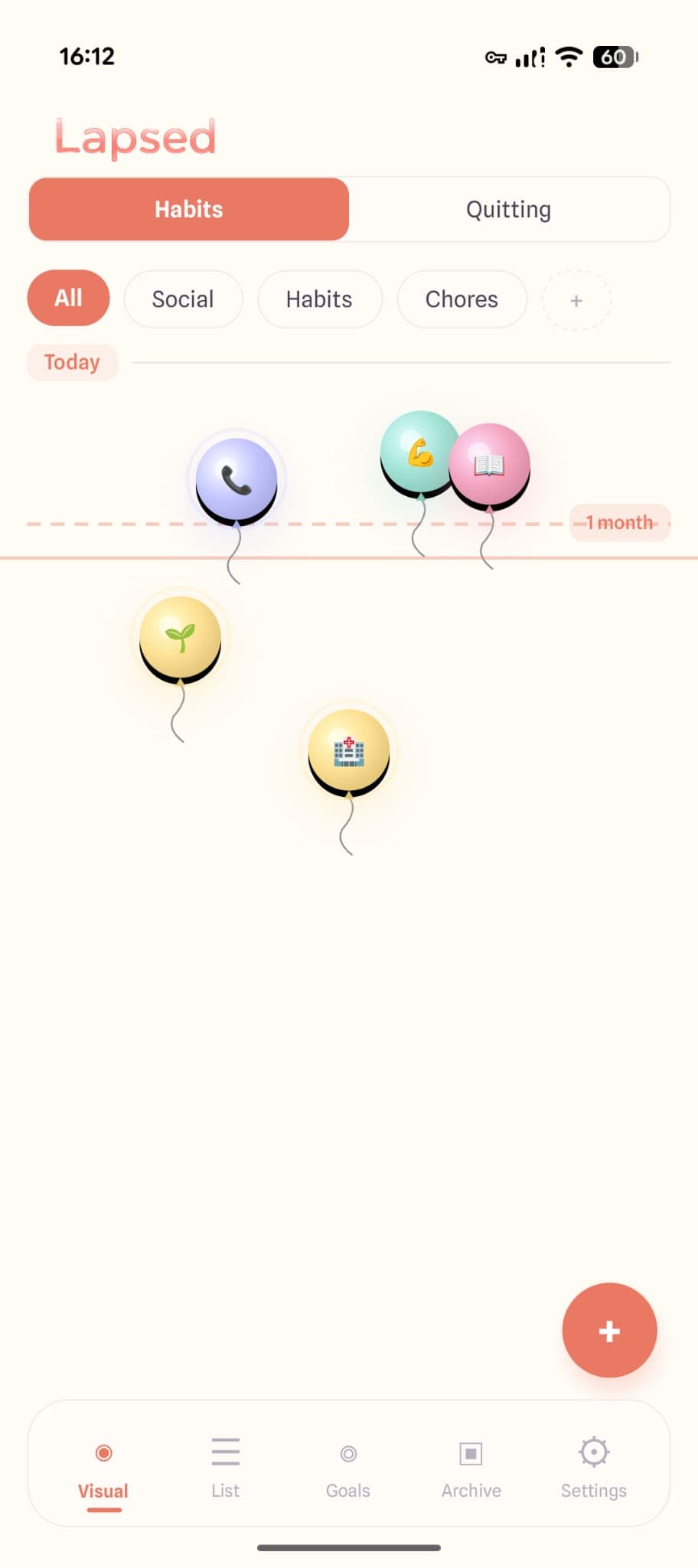
In Lapsed, when an item passes its threshold, it drifts further on the canvas and the visual cue gently signals that it has been a while. There is no alarm, no red warning, no guilt trip. Just a quiet visual nudge that something important is drifting.
See your relationship habits at a glance
Lapsed shows how long it has been since date night, quality time, and the small gestures that matter. Beautiful visual tracking with no guilt.
The Conversation It Starts
Something interesting happens when you start tracking relationship habits. You begin to notice patterns.
Maybe you are great at planning date nights but terrible at screen-free time during the week. Maybe thoughtful gestures come naturally but deep conversations do not. Maybe everything falls apart during stressful work periods and you can see it clearly in the drift of your items.
This awareness is not about guilt. It is about having real data to work with. "I feel like we have been disconnected lately" is vague and easy to dismiss. "It has been 23 days since we had a proper date and 12 since we spent time together without screens" is specific, neutral, and actionable.
Some people even share their tracker with their partner — not to assign blame, but to have a shared language for talking about relationship maintenance. "The date night balloon is getting pretty high up" is a lighter, easier way to say "I miss spending time with you."
It Is About Awareness, Not Perfection
The goal is not to optimise your relationship like a productivity system. There will be weeks where every item drifts past its threshold because you are dealing with illness, work deadlines, or just the normal chaos of life. That is fine.
What matters is the long-term pattern. A days-since tracker helps you notice the difference between "we had a rough week" and "we have been drifting for two months without realising it." The first is normal. The second is where relationships start to struggle.
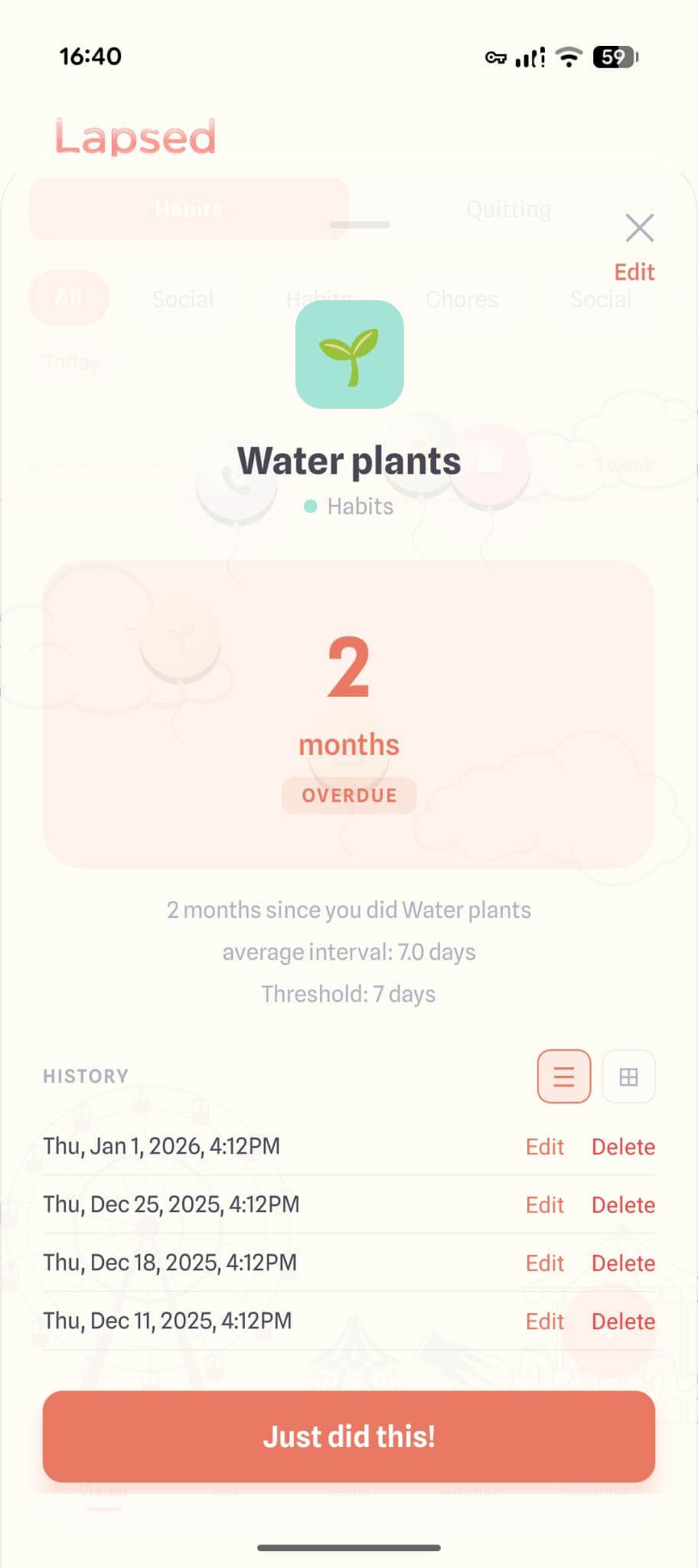
The best part is how low-effort this is. You are not filling in journals or answering daily questionnaires. You are tapping a single button when you do something: "Had date night. Done." That is it. The tracker handles the rest, turning your taps into a calm visual map of how intentional you are being.
Relationships thrive on attention. Not dramatic attention — just the steady, quiet kind that says "this matters to me and I am not going to let it drift." A days-since tracker is a small tool that makes that kind of attention much easier to maintain.
Read more about things worth tracking in your life or discover why simple tracking works better than complicated systems.
Small gestures, tracked gently
Five beautiful canvas styles. Flexible thresholds. A tracker that helps you be more intentional about the people who matter most.
Written by Lapsed
The beautiful days since tracker. Track your life visually.
Related Articles
Why an Aesthetic Habit Tracker Actually Works Better: Beauty as a Feature
Most habit trackers are ugly and forgettable. An aesthetic tracker with glassmorphism, spatial UI, and calm colours changes your relationship with tracking entirely. Here is why design matters more than features.
Days Since Tracker for Android: Lapsed Finally Brings Visual Tracking to Google Play
Android users finally have a proper days since tracker. Lapsed brings its visual canvas, threshold lines, and category system to Google Play — here is what makes it different from Day Counter and other Android options.
Days Since Tracker vs Habit Tracker: Which Do You Actually Need?
The difference between a days since tracker and a habit tracker is more than semantics. One asks 'did you do it today?' while the other asks 'how long has it been?' Here is why most people need the latter.